
- Smart building technologies, IoT sensors, building management systems, and automation, are reducing operational costs and improving resident experience across Singapore developments.
- Predictive maintenance powered by sensor data prevents equipment failures before they occur, reducing downtime and emergency repair costs.
- Smart access control and visitor management systems improve building security while creating more convenient experiences for residents and guests.
- Digital twin technology allows facilities managers to monitor and simulate building performance in real time.
- Singapore's Smart Nation initiative and BCA's Green Mark framework actively incentivise the adoption of smart building technologies.
Last Updated On: 16 Mar 2026
Modern technology is transforming how we live and work, and buildings are no exception. Today, offices, apartments, and even retail spaces are becoming smarter, safer, and more efficient through technology. These smart building solutions are designed to simplify daily operations, reduce costs, and enhance comfort.
For businesses, adopting smart systems is not just about convenience. It’s a long-term investment that enhances productivity, improves safety, and supports sustainability goals. Whether you’re managing a single office, residential properties, or an entire portfolio of commercial properties, understanding how smart building technology works can help you make better decisions for your business.
What Are Smart Building Solutions
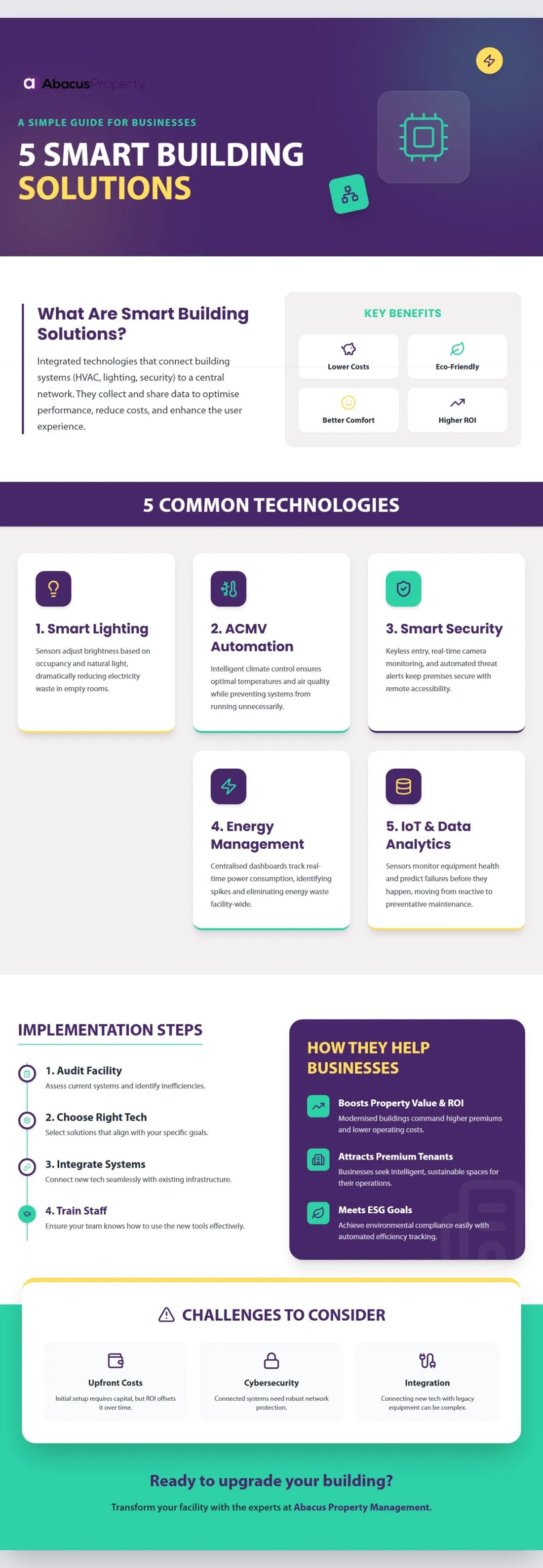
Smart building solutions use connected technology to monitor, control, and optimise a facility’s systems. They rely on sensors, data analytics, and automation to make buildings more responsive to human needs.
For example, lights can turn off automatically when no one is in a room, or air conditioning can adjust based on how many people are present. These systems learn from daily patterns and use data to improve comfort and efficiency. This type of alternative facility management with technology helps reduce waste, save money, and improve overall building performance.
Key Benefits Of Smart Building Solutions
Adopting smart technology can make a significant difference in how a business operates. Here are some of the biggest benefitscompaniesand property owners can experience:
- Energy Efficiency: Automated systems adjust lighting, heating, and cooling based on real-time needs, reducing unnecessary energy use.
- Cost Savings: Lower energy consumption and fewer maintenance issues mean big savings over time.
- Improved Comfort: Employees and tenants enjoy consistent temperature, lighting, and air quality, boosting satisfaction and productivity.
- Enhanced Security: Smart cameras, access systems, and alarms ensure better protection for your property and people.
- Sustainability: These technologies help reduce your carbon footprint, aligning your operations with eco-friendly goals.
By adopting smart building solutions, businesses can create an environment that’s more efficient, secure, and future-ready.
5 Common Smart Building Technologies

Smart buildings rely on a range of technologies that work together to make operations seamless. Here are some of the most common ones used today.
1. Smart Lighting Systems
Smart lighting adjusts automatically based on occupancy and natural light levels. For instance, lights can dim during daylight hours or turn off when rooms are empty.
This not only saves electricity but also extends the lifespan of bulbs. You can even control lighting systems remotely through mobile apps or central dashboards.
2. ACMV Automation
Air Conditioning and Mechanical Ventilation (ACMV) systems play a major role in comfort. With automation, sensors track temperature, humidity, and air quality to maintain the perfect indoor climate.
Smart ACMV systems also help detect inefficiencies, reducing energy costs while keeping everyone comfortable.
3. Smart Security Systems
Security is one of the biggest reasons businesses turn to smart solutions. These systems integrate cameras, motion detectors, and digital locks to enhance safety. Some even use facial recognition or mobile access control, making it easy to manage who enters or exits your building.
4. Energy Management Systems
Energy management software tracks electricity, gas, and water use in real time. It provides reports that help facility managers identify wasteful practices and improve energy performance. This data-driven approach helps lower bills and supports sustainability initiatives.
5. IoT Sensors And Data Analytics
The Internet of Things (IoT) connects all building systems through smart sensors that collect valuable data. This information helps managers predict maintenance needs, identify patterns, and make smarter operational decisions.
In strata management Singapore, these insights are especially helpful for managing large residential or commercial complexes.
How Smart Building Solutions Help Businesses
Smart technology doesn’t just make buildings more advanced; it creates measurable improvements in how businesses function.
- Boosts Productivity: By automating mundane administration, smart building solutions free up staff time to focus on high-value tasks like providing better customer service and proactively inspecting common areas for defects. This shift from reactive desk work to proactive engagement significantly boosts staff efficiency and improves overall resident/customer satisfaction.
- Reduces Downtime: Predictive maintenance alerts you to potential issues before they disrupt operations.
- Attracts Tenants And Clients: Modern, tech-driven spaces are more appealing to tenants and investors alike.
- Supports Remote Management: Smart systems can be monitored and controlled from anywhere using digital platforms.
- Improves Decision-Making: Access to real-time data helps property managers and business owners plan upgrades or maintenance more effectively.
With these benefits, smart buildings are quickly becoming a standard for businesses that value efficiency and sustainability.
Steps To Implement Smart Building Solutions
Getting started with smart technology doesn’t have to be complicated. Here’s a simple process to guide your implementation.
- Assess Current Systems: Take a close look at your existing building setup to identify areas that need improvement.
- Set Clear Goals: Decide what outcomes you want to achieve: lower energy bills, improved comfort, reduced administrative paper waste, or stronger security.
- Choose The Right Technologies: Select systems that fit your budget and property size. Partnering with an expert in facilities management in Singapore can help you choose wisely.
- Integrate and Test: Make sure all your smart systems work well together before going live. Testing ensures smooth communication between devices.
- Train Staff and Monitor Results: Teach your team how to use the new tools effectively. Regular monitoring, especially using automated licence renewal, will help you fine-tune your systems for even better performance.
Challenges To Consider

While smart building solutions offer many advantages, there are a few challenges worth noting.
- Upfront Costs: Installing smart technology can be expensive initially, but the long-term savings often outweigh the investment.
- Integration Issues: Older buildings may need upgrades to support modern technology systems.
- Data Privacy Concerns: Since smart systems collect data, it’s essential to have secure protocols in place.
- Maintenance Needs: Software and hardware require regular updates to stay reliable.
- User Adaptation: It may take time for older staff or tenants to adjust to automated systems and new technologies.
Understanding these challenges early can help you plan effectively and avoid unnecessary setbacks during implementation. Luckily, Abacus Property answer several of these issues from assistance in the investment process to educating building managers on new technologies.
Conclusion On Smart Building Solutions
Smart building solutions are no longer a luxury; they’re a necessity for modern business operations. They help reduce energy costs, improve efficiency, and create comfortable, sustainable environments. As technology continues to evolve, adopting these systems can give your company a competitive edge while ensuring your facilities run smoothly and efficiently.
At Abacus Property Management, we specialise in managing smart and sustainable properties across Singapore. Our team offers expertise in Alternative Facility Management with Technology and strata management Singapore, helping you modernise your buildings for the future.
Get in touch with our team today!