
13 Green Building Practices Plus 13 Examples In Singapore
Updated: Mar 23
Living in a tropical city like Singapore means we are always looking for ways to stay cool without breaking the bank on electricity. As our nation pushes toward the Singapore Green Plan 2030, the way we design and manage our homes is changing rapidly. You might be wondering, what are green building practices?
Essentially, these are methods for creating structures that are environmentally responsible and resource-efficient throughout a building's life cycle.
Implementing green building practices is no longer just a trend for luxury developers. It is a necessary shift to ensure our estates remain compliant, financially healthy, and comfortable for all residents.
1. Parkroyal Collection Pickering (Natural Cooling)
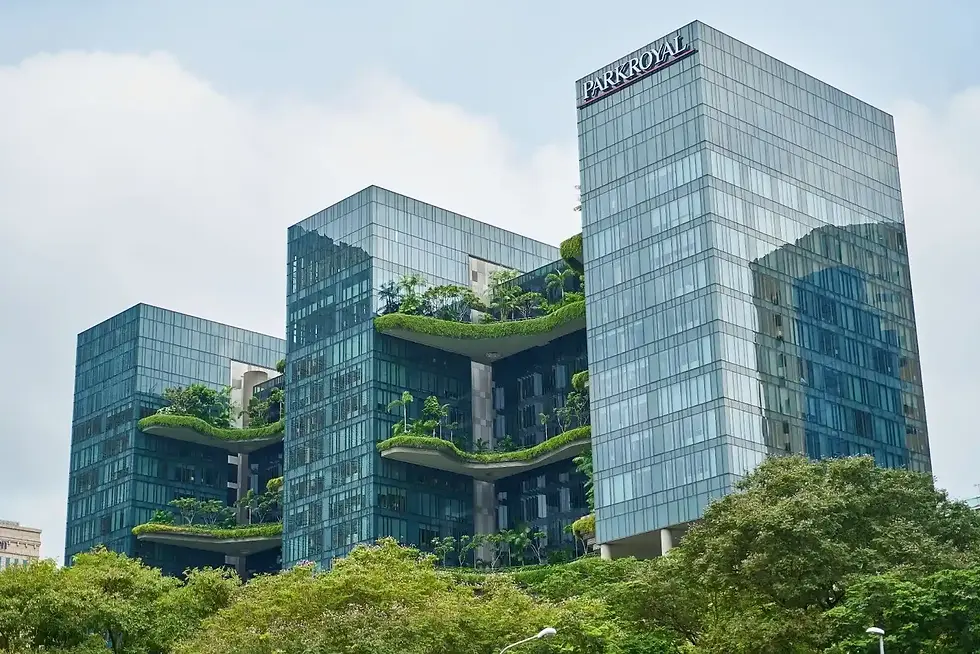
This "hotel-in-a-garden" uses extensive sky gardens to shade the building facade. This reduces the reliance on ACMV systems by lowering the ambient temperature naturally.
2. NUS SDE4 (Net-Zero Energy)
As a premier example of green building practices, this building produces as much energy as it consumes. It utilises over 1,200 solar panels to power its entire operations, including high-efficiency ACMV cooling.
3. Oasia Hotel Downtown (Vertical Greenery)
The lush facade acts as an "urban lung," using 21 species of plants to filter air and provide natural ventilation. This aligns with the desire for healthier living environments.
4. CapitaSpring (Biophilic Design)
This practice integrates nature into high-rise living. The four-storey green oasis provides a transition space that improves mental well-being and air quality.
5. Jewel Changi Airport (Rainwater Harvesting)

The Rain Vortex is not just for show; it collects rainwater to irrigate the indoor forest and cool the glass dome. This is a prime example of smart water management.
6. Kampung Admiralty (Integrated Solar & Farming)
This development uses rooftop space for solar energy and community farming. It maximises limited land use while providing sustainable food sources for residents.
7. SolarNova Programme (Solar Leasing)
This government initiative encourages estates to install solar panels with minimal upfront costs. It helps management councils significantly reduce common-area electricity bills.
8. Marina Bay District Cooling (Energy Efficiency)

By piping chilled water from a central plant, individual buildings don't need their own heavy chiller units. This reduces ACMV energy consumption by up to 40%.
9. The Interlace (Maximum Airflow)
The stacked "hexagonal" design is a practice meant to facilitate natural wind corridors. This ensures that units remain breezy, reducing the "trap" of heat in dense estates.
10. Tree House Condo (Carbon Reduction)
Known for its massive vertical garden, this practice helps sequester carbon and reduce the estate's overall environmental impact. It helps maintain the long-term asset value of the property.
11. BCA Academy (Smart Sensors)
This facility uses AI and sensors to monitor human traffic and adjust ACMV cooling accordingly, representing the future of automated property management.
12. Asia Square (Greywater Recycling)
This practice involves treating water from sinks and showers for use in ACMV cooling towers or toilet flushing, effectively managing rising water costs.
13. Punggol Northshore (Data-Driven Waste Management)
This district uses vacuum-powered waste collection to keep the estate clean and reduce manpower. This results in "Fewer Complaints" and more efficient estate operations.
Understanding Key Green Building Practices for Condominiums
While iconic landmarks are impressive, practical green building practices can be applied to existing residential estates, too. Effective property management involves assessing long-term asset value and finding ways to reduce operational costs.
Passive Cooling Design: This involves architectural choices like overhanging roofs or double facades that shade buildings from the scorching sun.
Smart Water Management: Installing water-efficient fittings and rainwater-harvesting systems helps manage common-area utility bills more effectively.
Energy-Efficient Retrofitting: Upgrading old chiller plants or switching to motion-sensor LED lighting can provide a short payback time of less than three years.
The Role of Professional Management in Sustainability
Maintaining a green building requires more than just planting trees. It demands a partner who adds real value through proactive ACMV audits and cost-saving solutions. Transparent dashboards can help management councils see exactly where energy is being wasted, allowing for smarter strategic decisions.
By focusing on these sustainable methods, estates can achieve the BCA Green Mark certification, which often increases property marketability and value.
Conclusion About Green Building Practices in Singapore
Sustainable living is the future of Singapore's urban landscape. By adopting these innovative examples and methods, we can create estates that are not only beautiful but also financially resilient and environmentally friendly.
If you want a realistic partner to help manage your estate's efficiency and daily operations, contact Abacus Property, a condominium managing agent specialising in property management services.
Frequently Asked Questions About Green Building Practices in Singapore
What Are Green Building Practices Exactly?
These are techniques used during the design, construction, and operation of a building to reduce its environmental impact. They focus on ACMV energy efficiency, water conservation, and sustainable materials to improve occupant health.
How Do Green Building Practices Examples Save Money For Residents?
By using energy-efficient systems like district cooling or LED lighting, the total operating expenses of an estate can be reduced by over 11%. This often results in lower maintenance fund contributions or more budget for estate improvements.
What Is The BCA Green Mark Scheme?
This is a rating system in Singapore that evaluates buildings based on their environmental performance. It encourages developers and owners to adopt more sustainable designs to reach the national goal of greening 80% of buildings by 2030.
Can Older Condominiums Be Retrofitted With Green Practices?
Yes, retrofitting is highly effective. Upgrading existing buildings can cut emissions significantly. Common retrofits include installing solar panels, upgrading ACMV chiller plants, and improving waste management systems.
Does A Green Building Certification Increase Property Value?
Statistics show that buildings meeting Green Mark standards often see a boost in capital value. Discerning buyers in Singapore are increasingly looking for homes that are "future-proofed" against rising energy costs.


Comments