

- The defect liability period, usually shortened to DLP, is the contractual period during which the developer remains responsible for defects in the units, the project and the common property.
- This distinction decides who reports a defect and who follows it up.
- Laid out in sequence, a typical new development runs something like this.
- These areas generally produce the highest number of defects in a new condominium, so they are the ones the managing agent's defect list should cover before it goes to the developer:
- During the defect liability period, common property defects follow a set cycle rather than being raised one at a time.
Quick answer: The defect liability period runs for 12 months from the delivery of vacant possession, or the fifteenth day after notice that TOP has been issued, whichever is earlier. During that window the developer must rectify defects in the units and the common property at its own cost.
For a new development, the defect liability period is the single most valuable 12 months in the estate's life. Every common property defect identified and reported inside that window is the developer's to fix. Every defect missed becomes the management corporation's to fund, out of contributions the owners have only just started paying.
It also runs at a time when owners have the least say in how the estate is run. This guide explains what the defect liability period covers, who manages the estate while it runs, how defects are reported, rectified and verified, and what owners and the incoming council should know.
What the Defect Liability Period Covers
The defect liability period, usually shortened to DLP, is the contractual period during which the developer remains responsible for defects in the units, the project and the common property. Report a defect within the period and the developer arranges rectification at its own cost.
The standard period for private developments in Singapore is 12 months. It starts from the date the developer delivers vacant possession, or the fifteenth day after the owner receives notice that Temporary Occupation Permit has been issued, whichever comes first. That second limb matters: the clock can start before an owner has collected keys.
In practice, owners rarely have a full 12 months to spot defects in their own units. One to three months can pass between TOP and key collection, so part of the period has already run before many owners have moved in.
Unit Defects and Common Property Defects Are Handled Separately
This distinction decides who reports a defect and who follows it up.
A defect inside a private lot is for the individual owner to report. The owner raises it with the developer and follows it through. It is not something the managing agent pursues on the owner's behalf.
A defect in the common property is handled differently. That covers the lobbies, corridors, lifts, car park, pool and pool plant, landscaping, drainage, external works, roof, and the building services that serve the development as a whole. Under the BSMA, the common property ultimately belongs to the management corporation. During the defect liability period, though, common property defects are identified and reported to the developer by the managing agent running the estate, which in a new development is usually appointed by the developer itself.
Getting this wrong in either direction causes problems. An estate that absorbs unit defects takes on work it was never liable for. An estate that treats a common property defect as somebody's private problem can see it go unreported until the period has ended. Classifying each report correctly at the point it is received is what keeps the two apart, which is the same discipline that governs condo property management responsibilities more generally.
The Timeline: Who Is in Charge During the DLP
Laid out in sequence, a typical new development runs something like this. TOP is issued and notice goes to owners. The defect liability period starts at vacant possession, or fifteen days after that notice, whichever is earlier. Owners collect keys over the following weeks. The developer manages the estate throughout, usually through a managing agent it has appointed. The first annual general meeting is generally held around 12 to 13 months after TOP, which is when owners elect the council and decide whether to keep the managing agent. Handover documentation then passes across.
In other words, by the time a council is formed, the defect liability period has usually already expired. Common property defects raised during the period are reported and followed up while the developer is still running the estate. Very few owners realise that they can ask for an early annual general meeting to take over management of the estate from the developer, which gives them a say during the period rather than after it.
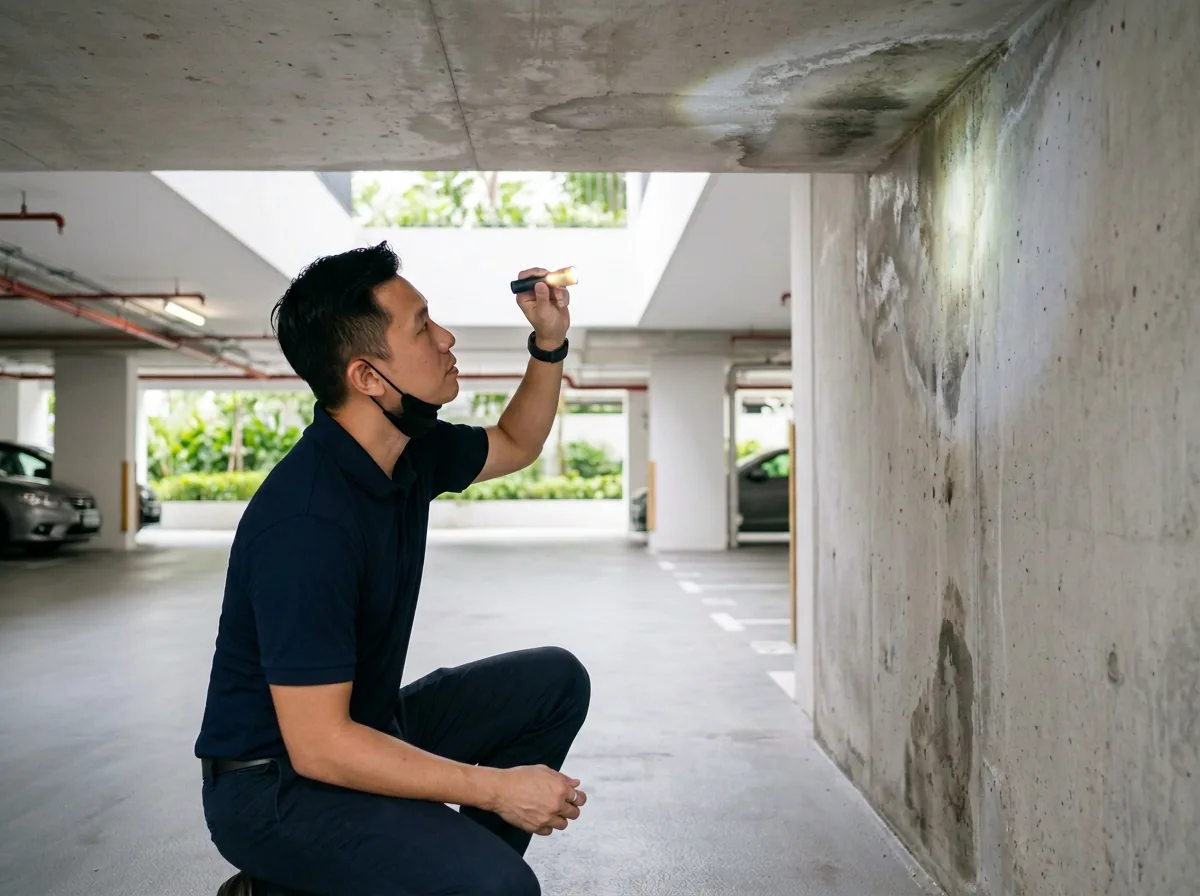
Where Defects Usually Appear During the DLP
These areas generally produce the highest number of defects in a new condominium, so they are the ones the managing agent's defect list should cover before it goes to the developer:
- Structure and finishes. Cracking, spalling, water staining, uneven or popped-up tiles, defective paintwork in common areas.
- Waterproofing. Roofs, planter boxes, basement car parks, pool surrounds, and any area over habitable space. Water ingress is the most expensive category to fix later.
- ACMV and building services. Common area ventilation, pumps, generators, and control panels, including whether they perform to specification rather than merely switch on.
- Lifts. Ride quality, levelling and door operation.
- Drainage and external works. Falls and ponding, silt traps, sumps, driveway surfaces, and boundary works.
- Pool and water features. Filtration plant, balance tanks, leaks and tiling.
- Fire protection and life safety. Detection, suppression and emergency lighting.
- Landscaping and irrigation. Establishment failures, wilting or dying planting, and irrigation coverage.
Each item goes onto the list with a photograph and its exact location, so the developer can find it, inspect it, and rectify or reject it.
How Defects Are Reported and Rectified During the DLP
During the defect liability period, common property defects follow a set cycle rather than being raised one at a time.
- Compile and send. The managing agent records each defect in a spreadsheet with photographs and its location, and emails the list to the developer.
- Developer response. The developer inspects the items on the list and either rectifies or rejects each one.
- Record. Completed rectifications are marked in the same spreadsheet, so it stays the single record of what is open and what is closed.
- Joint inspection. The managing agent and the developer inspect the rectified items together to verify the work before they are closed.
Several defect lists are often being worked on at the same time, which is why keeping each item's status up to date matters more than the format of any one list.
Where the Defect Process Breaks Down
When defects slip through during the period, it is rarely because the developer refused to act. It is usually because the process was not followed.
- Defects are raised verbally at site meetings and never added to the list.
- Lists are kept across separate emails, so nobody can say which items are still open.
- Rectified items are closed without a joint inspection, and the same defect resurfaces after the period has ended.
The common thread is record-keeping. A single, current defect list with photographs is what keeps the process on track.

How Abacus Property Manages Defects During the DLP
At Abacus Property, a new estate's defect position is treated as a time-critical exercise from the day we are appointed. We establish the expiry date first, then work backwards to schedule a systematic common property inspection with enough margin for reporting, rectification and re-inspection inside the window.
Every defect is logged in our centralised tracking system with its location, category and photographic evidence, so the register is a single source of truth rather than a thread of emails. Each item is classified at intake as common property or private lot, which keeps the common property list clean and stops the estate absorbing work it was never liable for. Our site team and head office see the same register, so items that are stalling are visible while there is still time to escalate.
We also verify rectified items through a joint inspection rather than closing them on the contractor's word, because a defect signed off without verification simply returns after the developer's obligation has ended. When the first annual general meeting comes round, the incoming council receives a clear record of what was reported, what was rectified and what remains outstanding.
Making the Most of the Defect Liability Period
Because the developer runs the estate for most of the defect liability period, owners have limited direct control over how common property defects are handled. What they can do is report defects in their own units promptly, ask the managing agent how the common property defect list is being tracked, and consider asking for an early annual general meeting so owners take over management sooner. Once a council is elected, its first task should be reviewing the defect list and handover documents it inherits.
If you would like that run properly as part of your property management arrangement, our team can build the defect register and follow each item through to rectification and joint inspection. Get in touch with us to talk through your estate's defect position.
Speak to Abacus Property about managing defects in your new estate.